
Why Surface Cleaning Fails Against Severe Pet Urine (And How Deep Restoration Works)
If you have tried DIY enzyme sprays, supermarket rental machines, or a cheap $99 carpet cleaning special to get rid of pet accidents, you already know the frustrating truth: the smell always comes back.
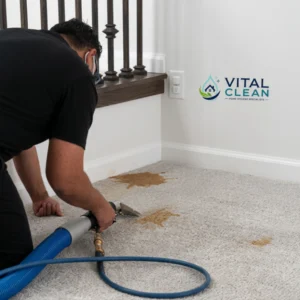
When pet urine sinks past the primary carpet fibers, it pools into the backing, the cushion padding, and even saturates the subfloor beneath. Surface washing only reactivates the lower layers, temporarily masking the odor before humidity brings the ammonia smell right back to the surface.
If you are looking for a quick, cheap patch-job or a surface-level splash-and-dash, our services won’t be the right fit. But if you want a permanent, scientifically engineered solution to restore your home’s indoor air quality and protect high-end flooring, read on.
The Chemistry of Pet Urine: Why Standard Cleaners Fail
To understand why traditional carpet cleaning methods fail against pet accidents, you have to look at the chemistry of urine. When an animal urinates on a carpet, the liquid is initially acidic (pH around 5 or 6), making it relatively easy to extract if addressed immediately. However, as the urine dries, it undergoes a complex chemical transformation.
- The Alkaline Conversion: As the liquid evaporates, urea breaks down into ammonia, driving the pH level high into the alkaline spectrum (pH 8 to 10). This alkaline shift causes uric acid crystals to form. These crystals bond permanently with the synthetic or natural fibers of your carpet and the porous backing underneath.
- The Permanent Crystal Bond: Standard water-soluble detergents cannot dissolve uric acid crystals once they have locked onto the material. Routine store-bought or cheap commercial carpet cleaning formulas only wash the upper surface, leaving the hardened crystals embedded deep in the backing and cushion padding.
- Humidity Activation (The Ammonia Trap): Uric acid is hygroscopic, meaning it constantly pulls moisture out of the surrounding air. Every time your Utah home experiences a spike in humidity—or when a budget carpet cleaner saturates your carpets with low-pressure hot water—those dormant uric acid crystals reactivate. They immediately release pungent ammonia gas back into your home, causing the old pet smell to return stronger than ever.
The True Cost of DIY Remedies and Cheap “Splash-and-Dash” Cleaners
When faced with persistent pet odors, many homeowners cycle through a frustrating loop of temporary fixes before realizing they are wasting money:
- Supermarket Rental Machines: Rental units lack the vacuum lift and sustained heat required to pull moisture out of dense padding. Instead of extracting the liquid, they inject soapy water straight through the carpet backing, pushing the urine solution deeper into your subfloor and creating an ideal breeding ground for hidden mold.
- DIY Vinegar, Baking Soda, and Enzyme Sprays: While grocery store enzyme sprays can help break down fresh surface proteins, they are chemically powerless against old, crystallized uric acid salts deep in the pad. Pouring liquids on top of a soaked pad only broadens the contamination zone.
- The $99 “Splash-and-Dash” Trap: Low-end carpet cleaning services rely on high-volume, low-margin business models. They rush through rooms using generic wands, leaving behind high levels of sticky detergent residue. Over time, that soapy residue acts like a magnet, attracting airborne dust and rapid re-soiling that ruins your flooring investments.
Our Step-by-Step Professional Restoration Process
Permanent odor removal requires targeted engineering rather than a basic wash. Here is the multi-stage protocol required to fully restore heavily contaminated flooring:
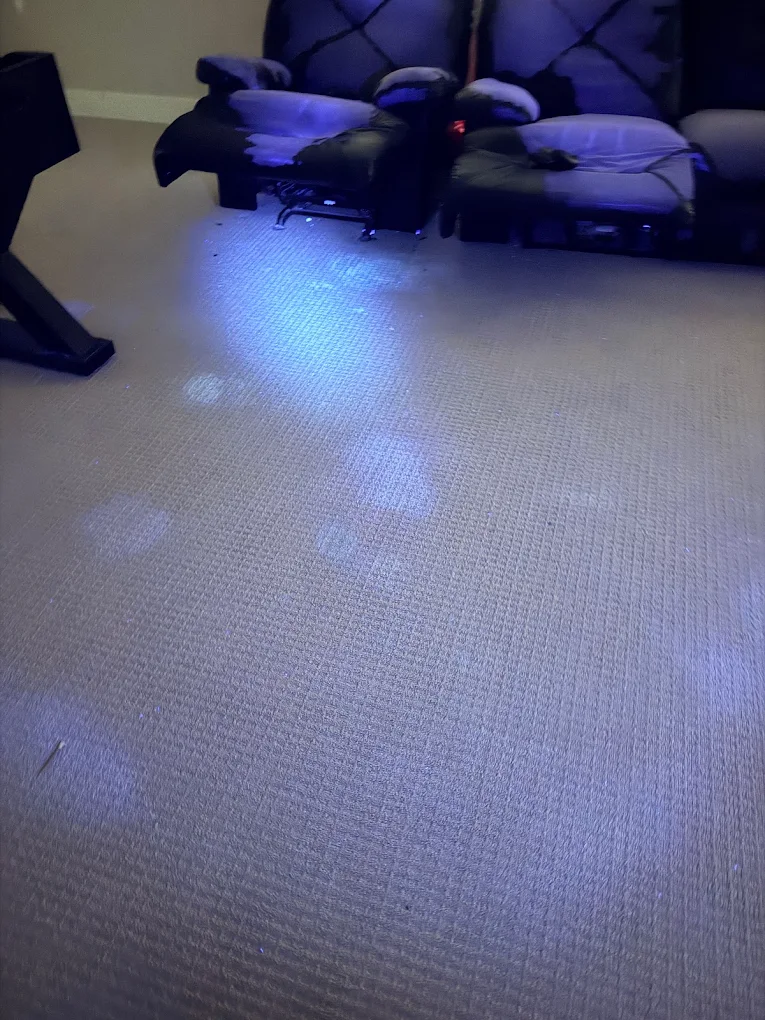
- Step 1: Thermal & UV Mapping: We locate hidden contamination zones and trace the exact boundaries of deep-seated saturation using specialized detection tools.
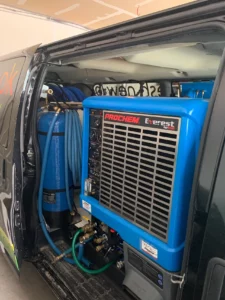
- Step 2: Subsurface Extraction (Water Claw Technology): Instead of tearing up your carpet, we place high-powered flash-extraction tools directly over the affected area. By flooding the zone with safe treatment solutions and applying intense vacuum suction, we pull trapped liquid, organic waste, and uric acid straight out of the cushion padding and subfloor.
- Step 3: Molecular Neutralization: We apply specialized professional-grade neutralizing formulations that break down stubborn uric acid bonds at a molecular level, permanently eliminating the odor source rather than masking it with perfumes.
- Step 4: High-Velocity Restorative Flushing: We flush the fibers with residue-free solutions, returning the carpet to a neutral pH balance and ensuring optimal indoor air quality for your home and family.
Why Health-Conscious Homeowners Choose Chemical-Free Solutions
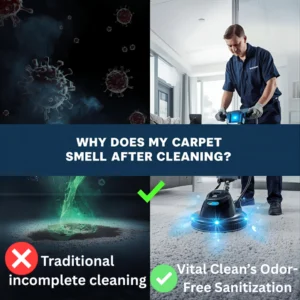
Traditional carpet cleaning often relies on harsh, fluorinated chemical residues, optical brighteners, and heavy synthetic fragrances that can irritate sensitive family members and pets.
True restoration focuses on safety and environmental health. By utilizing advanced, residue-free methods—including proprietary approaches like Advanced Hydroxidation Cleaning Technology®—we break down organic waste naturally without leaving behind sticky chemical films. Your carpets stay cleaner longer, and your indoor environment remains completely safe for children and pets.
Frequently Asked Questions (FAQ)
Can severe pet urine odors be removed permanently from carpet?
Yes, but only if the treatment reaches the source. Surface cleaning cannot eliminate urine trapped in the backing or subfloor padding. True restoration requires neutralizing the uric acid crystals at their deepest level using high-flow subsurface extraction.
Is professional pet odor restoration safe for children and pets?
High-end restorative cleaning avoids harsh, toxic chemicals or masking agents. Look for providers utilizing chemical-free, non-toxic formulations that leave zero chemical residue behind, ensuring a safe indoor environment for sensitive family members.
Why do cheap carpet cleaning specials fail to remove pet smells?
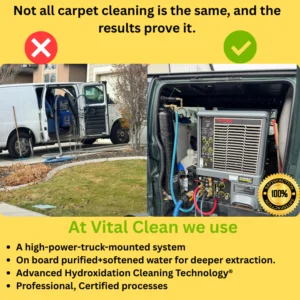
Budget cleaning services rely on high-volume, low-margin appointments using basic portable or low-pressure truck-mounted wands. They use excessive water without proper extraction power, which often pushes urine deeper into the subfloor and causes mold growth or re-activated odors.
Can pet urine damage wood subfloors?
Yes. If left untreated for a long period, the alkaline salts and moisture in pet urine can warp, stain, and structurally compromise wooden subfloors, leading to costly subfloor replacement. Deep restorative extraction prevents this structural breakdown.
How long does professional pet urine restoration take?
Depending on the severity of the contamination and the square footage involved, a comprehensive pet restoration treatment typically takes between one to three hours, followed by a targeted drying period using high-speed air movers.
Ready to Book Permanent Relief from Pet Odors?
If you are dealing with deep-seated pet contamination in your home and want a permanent, scientifically engineered restoration rather than a temporary cover-up, we are here to help.
We don’t do guessing games or ballpark quotes over the phone. We book the service, arrive on-site, and provide an honest, transparent, upfront price before any work begins.
- Call Us Directly: Speak with our team today to schedule your service appointment.
- Book Online: Secure your appointment slot directly through our website, and let our technicians handle the rest.