




Understanding why odors return, what causes them, and how a professional inspection can help identify the source.
Have you ever had your carpets professionally cleaned, only to notice that the odor comes back a day or two later?
You’re not alone.
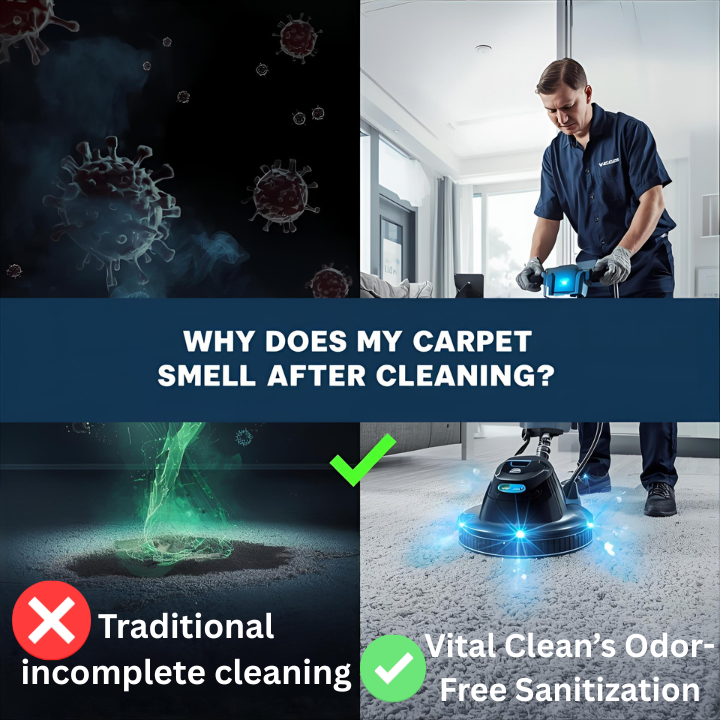
When carpet smells after cleaning, it does not necessarily mean the cleaning created the odor or that the carpet could not be cleaned properly. In many situations, moisture from the cleaning process can temporarily make an existing odor more noticeable, especially when contamination extends below the carpet fibers.
Pet urine, organic material, previous cleaning residue, moisture, and contamination beneath the carpet can all contribute to persistent carpet odors.
Understanding where the odor is coming from is the first step toward choosing the right solution.
Why Does My Carpet Smell Worse After Cleaning?
Professional carpet cleaning introduces moisture into the carpet. As that moisture moves through the fibers and begins to evaporate, it can interact with contaminants that were already present.
If odor-causing material remains deeper in the carpet system, the smell may become more noticeable while the carpet is damp.
In other words, the cleaning may reveal an existing odor rather than create it.
This is particularly common when carpet has experienced repeated pet accidents, spills, heavy organic contamination, or previous cleaning attempts that did not fully address the source.
The Most Common Reasons Carpet Odors Return After Cleaning
1. Pet Urine Has Soaked Beneath the Carpet
Pet urine is one of the most challenging causes of persistent carpet odor.
A fresh accident may be relatively localized. Older or repeated accidents, however, can migrate beyond the visible carpet fibers and affect:
- Carpet fibers
- Carpet backing
- Carpet padding or cushion
- Tack strips or surrounding materials
- Subfloor in more severe cases
When urine contamination extends beneath the carpet, cleaning only the visible surface may not address the entire source.
This is why persistent pet urine odor sometimes requires a more thorough inspection and specialized treatment rather than another routine carpet cleaning.
2. Previous Cleaning Left Residue
Cleaning products that remain in carpet after previous cleaning can contribute to problems over time.
Some residues can attract soil or interact with other contaminants. If organic material or pet contamination is also present, the combination may contribute to lingering odors.
This is one reason proper application and thorough extraction matter.
A carpet should not simply be made wet and left with cleaning chemistry behind. The cleaning process should be appropriate for the carpet and the condition being treated.
3. Organic Material Remains in the Carpet
Other organic materials can contribute to persistent odors, including:
- Food and beverage spills
- Pet accidents
- Body oils
- Organic debris
- Biological contamination
- Other substances that have migrated into the carpet system
Depending on the condition of the carpet, these problems may require more than routine surface cleaning.
Carpets can also collect dust, pollen, pet dander, and other particles over time. If indoor allergens are a concern, see our Allergy Relief Cleaning Service to learn more about our approach to deep cleaning carpets, upholstery, and rugs.
Depending on the situation, these problems may require more than routine surface cleaning.
4. Wicking Can Bring Contamination Back to the Surface
Have you ever watched a stain disappear during cleaning, only to see it return after the carpet dries?
This can be a result of wicking.
As moisture moves through carpet fibers and begins to dry, dissolved contaminants from deeper areas can migrate toward the surface.
Wicking is often discussed in relation to visible spots, but deeper contamination can also contribute to odors becoming noticeable again.
This is why treating only what is visible on the surface does not always solve the underlying problem.
Why Does My Carpet Smell When It Gets Wet?
Some homeowners notice that their carpet smells fine when dry but develops an odor whenever it becomes damp.
Moisture can make certain existing odors more noticeable.
If organic contamination, pet urine, residue, or other odor-producing material is present below the surface, moisture can temporarily reactivate or release odor compounds.
This does not automatically mean there is mold or that the carpet is damaged.
The source of the odor needs to be identified before determining what treatment is appropriate.
Why Does Pet Urine Smell Come Back After Carpet Cleaning?
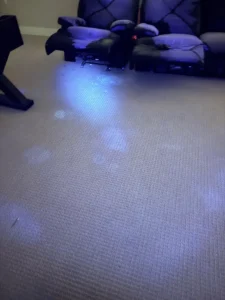
Pet urine can be particularly difficult because the contamination may extend farther than the visible stain.
A small-looking spot on the carpet does not necessarily represent the full area of contamination.
Urine can migrate downward and outward through carpet backing and padding. In severe or long-term cases, contamination can reach materials beneath the carpet.
A routine carpet cleaning may improve the appearance of the carpet and reduce surface-level odor while deeper contamination remains.
When that happens, the odor can return as the carpet dries or becomes humid again.
What happens next depends on the extent of the contamination.
A professional assessment can help determine whether the problem is primarily within the carpet fibers or whether additional treatment may be necessary.
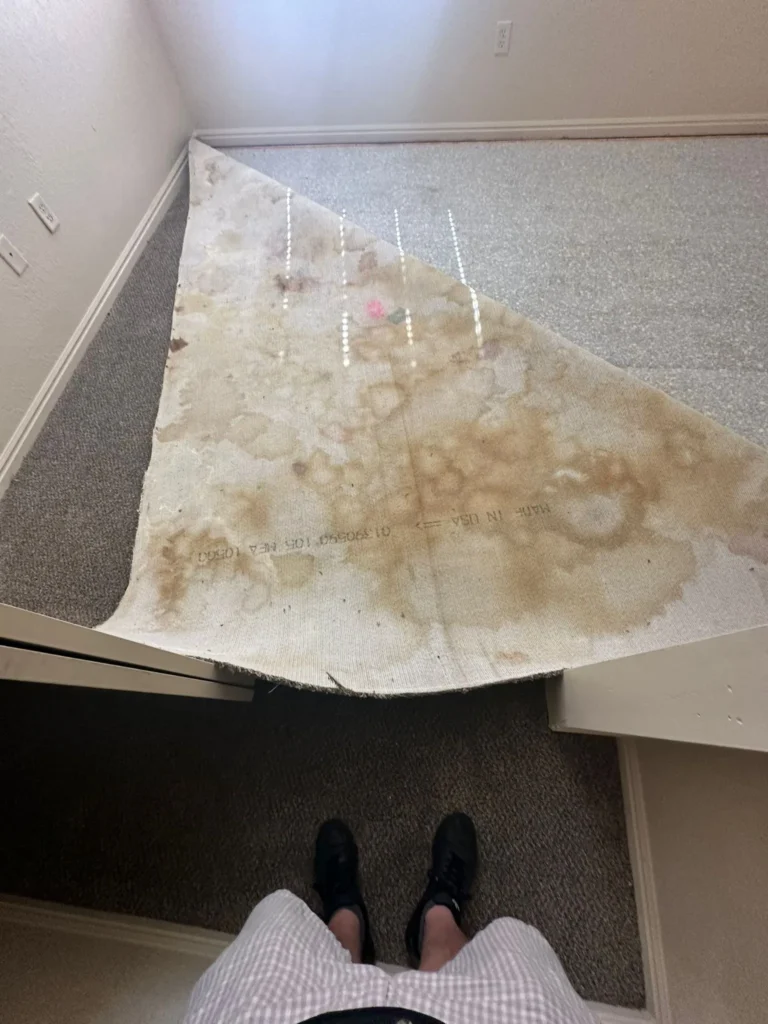
Lifted carpet showing pet urine contamination on the carpet backing during a professional inspection.
Can Carpet Cleaning Residue Cause Odor?
Residual cleaning chemistry can sometimes contribute to carpet problems, particularly when residue remains in the carpet and later attracts additional soil.
However, persistent odor should not automatically be blamed on cleaning residue.
The carpet may also contain pet urine, organic contamination, moisture-related issues, or other substances that existed before the cleaning.
That is why identifying the source is more useful than simply assuming the odor came from the most recent cleaning.
When Carpet Odor Is More Than a Surface Problem
Sometimes the carpet itself is not the only place that needs to be considered.
If an odor continues after cleaning, the source may extend into:
- Carpet backing
- Carpet padding
- Tack strips
- Subfloor
- Areas underneath furniture
- Adjacent materials
This is particularly important with long-term pet urine contamination.
A carpet can appear relatively normal from the surface while significant contamination exists underneath.
Inside the Inspection
During a professional inspection, areas of concern can sometimes reveal conditions that are not visible from the surface.
For example, lifting a section of carpet may show contamination beneath the backing that could not be identified simply by looking at the carpet fibers.
This is one reason an inspection can be valuable before recommending a treatment.
Why We Inspect Before Recommending Treatment
No two homes—or two carpets—are exactly alike.
Before recommending a cleaning or odor-treatment process, the condition of the carpet should be evaluated.
Factors may include:
- Carpet construction
- Level of soiling
- Carpet age and condition
- Previous cleaning attempts
- Evidence of pet accidents
- Location and intensity of the odor
- Visible staining
- Whether contamination may extend beneath the carpet
- Whether the carpet is a candidate for additional restoration
The goal is to understand the problem before choosing the treatment.
That helps homeowners make informed decisions instead of repeatedly paying for the same type of cleaning when the actual source may be deeper.
How Vital Clean Approaches Persistent Carpet Odors
At Vital Clean, we don’t believe every carpet odor should be treated the same way.
Our process begins with evaluating the carpet and identifying the areas of concern.
Depending on the condition, treatment may involve professional hot-water extraction, specialized odor and stain treatment, subsurface extraction for appropriate situations, and other corrective cleaning methods.
Our Advanced Hydroxidation Cleaning Technology® is part of our advanced cleaning approach and is designed to help address difficult cleaning challenges without simply masking odors with fragrance.
For pet urine problems, the appropriate treatment depends on the extent and location of the contamination.
The objective is not to cover up an odor.
The objective is to identify the source and address the contamination as thoroughly as the condition allows.
Can Every Carpet Odor Be Removed?
Not always.
Some odors respond very well to professional treatment.
Others may have affected the carpet padding, subfloor, or other materials to the point that additional restoration—or, in some situations, carpet replacement—may be the more appropriate option.
The severity, age, location, and extent of contamination all matter.
An honest inspection should establish realistic expectations before treatment begins.
What If My Carpet Still Smells After Cleaning?
If your carpet still smells after it has been cleaned, don’t immediately assume you need another routine cleaning.
Instead, consider:
- When did the odor return?
- Does it become stronger when the carpet is damp?
- Is there a history of pet accidents?
- Was the area previously treated or cleaned several times?
- Is the odor concentrated in one area or throughout the room?
- Could contamination extend beneath the carpet?
These details can help identify whether the problem is primarily surface-level or requires a more detailed evaluation.
Frequently Asked Questions
Why does my carpet smell after cleaning?
Carpet can smell after cleaning when moisture makes an existing odor more noticeable. Pet urine, organic contamination, residue, and contamination beneath the carpet can all contribute to odors that return as the carpet dries.
Why does my carpet smell worse after cleaning?
Cleaning introduces moisture into the carpet. If odor-causing contamination remains beneath the surface, that moisture can temporarily make the odor more noticeable. The cleaning process is not necessarily creating the odor.
Why does my carpet smell when it gets wet?
Moisture can make existing odors more noticeable. If contamination is present within the carpet, padding, or another underlying material, the odor may become stronger when the area becomes damp.
Why does pet urine smell come back after cleaning?
Pet urine can migrate beyond the visible carpet fibers into the backing, padding, and sometimes the subfloor. If contamination remains beneath the surface, the odor may return after the carpet dries or becomes damp again.
Can carpet cleaning remove pet urine odor?
It can, depending on the extent and location of the contamination. Surface-level contamination may respond to appropriate treatment, while deeper contamination may require specialized extraction or additional restoration.
Can carpet odor mean there is mold?
Not necessarily. Carpet odor can have many causes, including pet urine, organic contamination, cleaning residue, and moisture. A persistent musty odor combined with an ongoing moisture problem should be evaluated to determine the actual source.
Should I clean my carpet again if it still smells?
Not necessarily. If the odor keeps returning, another routine cleaning may not address the underlying cause. A professional inspection can help determine whether the issue is surface-level or extends beneath the carpet.
Can carpet sometimes need to be replaced because of odor?
Yes. In severe cases, contamination can affect carpet padding or subfloor materials. When contamination is extensive, replacement or additional restoration may be more appropriate than repeated cleaning.
The Bottom Line
If your carpet smells after cleaning, the odor may not be coming from the carpet fibers alone.
Pet urine, organic contamination, cleaning residue, wicking, moisture, and contamination beneath the carpet can all play a role.
The most important step is identifying the source before deciding what treatment is appropriate.
At Vital Clean, we evaluate the condition of the carpet, explain what we find, and recommend the most appropriate cleaning or corrective treatment based on the specific conditions in your home.
Don’t simply mask the odor. Find the source.
Still Not Sure What’s Causing the Odor?
If your carpet continues to smell after cleaning, a professional inspection can help determine whether the issue is limited to the carpet fibers or extends beneath them.
Vital Clean provides professional carpet cleaning, pet urine and odor treatment, and corrective cleaning services throughout Salt Lake County and surrounding Utah communities.
Schedule a professional carpet inspection or cleaning with Vital Clean today.
Book a Cleaning with Vital Clean Today!
CALL NOW →This article is part of Project Everest, Vital Clean's educational learning center dedicated to helping homeowners understand carpet cleaning, pet urine treatment, indoor hygiene, and professional restoration cleaning through honest, science-based information.